

On June 9, 2026, Dr. Wang Chunfeng, Executive Director of the Asia-Pacific Network for Sustainable Forest Management and Rehabilitation ("APFNet"), visited the Interim Secretariat of the International Mangrove Center ("IMC"). The visit provided an opportunity for both organizations to discuss mangrove conservation, ecosystem restoration, capacity building, and international cooperation, and to express their intention to establish a long-term cooperation mechanism.
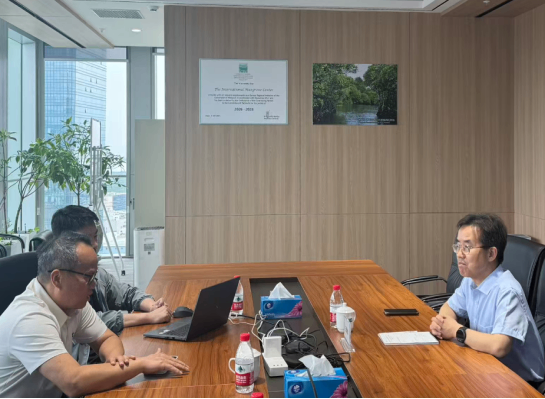
Photo: Dr. Wang Chunfeng, Executive Director of APFNet, visiting the Interim Secretariat of the IMC.
Prof. Bao Daming, Director General of the IMC Interim Secretariat, warmly welcomed Dr. Wang Chunfeng and presented the IMC’s development progress and key activities. He highlighted the vital role of mangrove ecosystems in addressing global environmental challenges, noting their significant ecological, social, cultural, and economic value, and their critical role in climate change mitigation and adaptation, biodiversity conservation, coastal resilience, and sustainable livelihoods. He emphasized the IMC’s commitment to strengthening partnerships with regional and international organizations to promote the conservation, restoration, and sustainable management of mangrove ecosystems. He expressed that cooperation between the IMC and APFNet would generate meaningful outcomes through complementary expertise, resource sharing, and joint initiatives in areas of mutual interest.
Dr. Wang Chunfeng introduced APFNet’s mission, membership structure, and activities across the Asia-Pacific region, including capacity-building programs, demonstration projects, policy dialogue, and technical cooperation. He underscored the strong linkages between terrestrial forest restoration and coastal ecosystem conservation, emphasizing that mangroves are an integral component of nature-based solutions for climate resilience and biodiversity conservation. He expressed APFNet’s strong interest in deepening collaboration with the IMC and exploring opportunities for joint action in capacity building, public awareness and education, research, and on-the-ground restoration initiatives. He noted that closer cooperation between the two sides could contribute significantly to regional and global efforts to protect and restore mangrove ecosystems.
The discussions highlighted opportunities for collaboration in knowledge exchange, technical training, awareness-raising initiatives, demonstration projects, and support for developing countries in strengthening mangrove governance and management. Both sides also exchanged views on the development of a Memorandum of Understanding (MoU) to formalize cooperation and facilitate future joint activities.
Following the meeting, both sides visited the Guangdong Neilingding Futian National Nature Reserve, where they observed the reserve’s rich biodiversity, mangrove ecosystems, and ongoing efforts to protect and restore critical habitats for migratory birds. The field visit provided an opportunity to discuss practical experiences in ecosystem restoration and the integrated management of forests and coastal wetlands.
The visit marked an important step toward strengthening cooperation between APFNet and the IMC. Both organizations reaffirmed their shared commitment to promoting mangrove conservation, restoration, and sustainable forest management while contributing to international biodiversity, climate, and sustainable development agendas. Through enhanced collaboration, APFNet and the IMC aim to support the coordinated protection and sustainable development of forests and coastal wetlands worldwide.
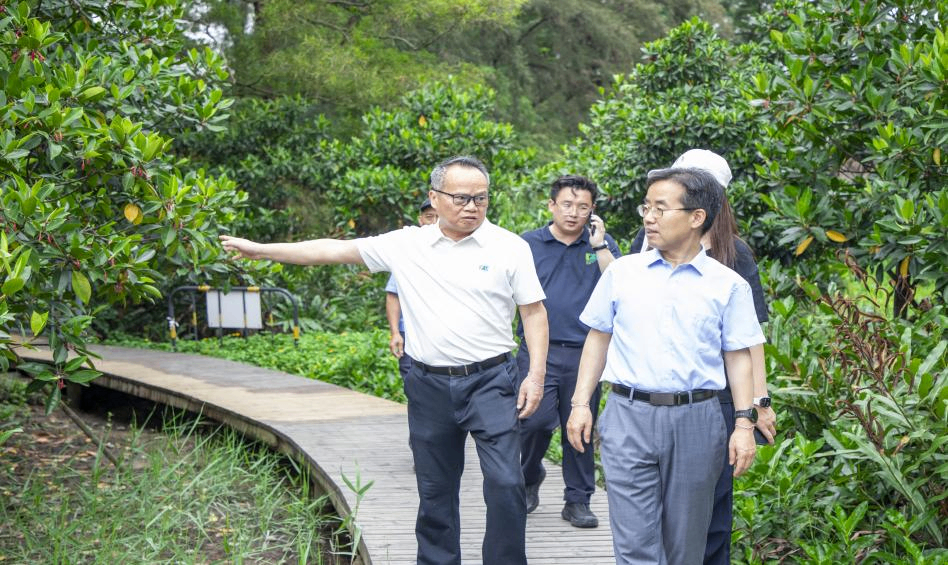
Photo: Professor Bao Daming, Director General of the IMC Interim Secretariat, and Dr. Wang Chunfeng, Executive Director of APFNet, at the Guangdong Neilingding Futian National Nature Reserve